
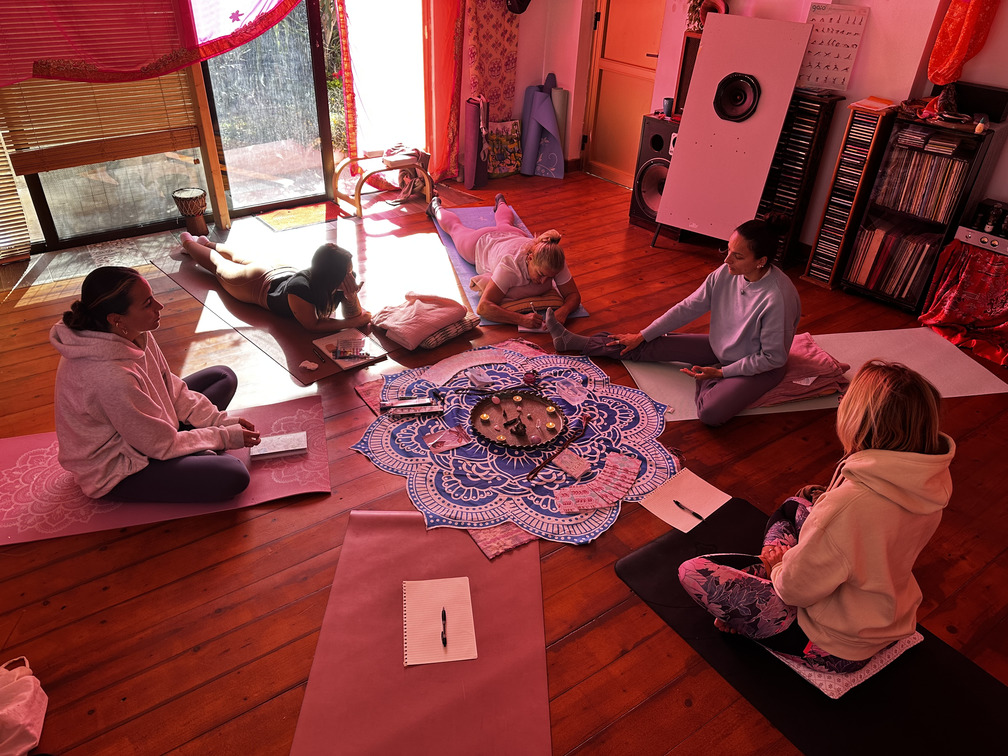
We live in a fast-paced world, and often our body and mind end up paying the price: tension in our shoulders, fatigue that doesn’t go away, or a feeling of being disconnected from ourselves.
Integrative therapy is based on a simple idea: nurturing wellbeing by considering the whole person — body, emotions, and mind — rather than treating each aspect separately.
In this article, I’ll explain what integrative therapy is, what it involves, which emotional and mental aspects it addresses, who it may benefit, and what advantages it offers.
What Is Integrative Therapy?
Integrative therapy is a wellbeing approach that combines body-based practices, emotional support, and mindfulness to support the person as a whole.
The word integrative captures its essence: bringing different elements together. It recognises that the body, emotions, and mind are interconnected, and that what happens in one affects the others.
Por ejemplo, el estrés sostenido puede notarse en el cuerpo como contracturas o cansancio, y una tensión física mantenida puede afectar a cómo nos sentimos. Trabajar solo una de las partes suele dar resultados limitados; mirar el conjunto ayuda a entender qué está pasando y a cuidarlo mejor.
[Optional, for those searching for other terms: This approach is also sometimes referred to as a holistic approach.]
What Does an Integrative Therapy Session Involve?
Each session is tailored to the individual, where they are in their journey, and what they need. There’s no one-size-fits-all approach. Depending on the person, a session may include:
- Relaxation techniques and massage to release physical tension.
- Conscious movement and therapeutic yoga to reconnect with your body and tune in to its needs.
- Breathwork and mindfulness to calm the nervous system.
- Somatic therapy, which works with the body to help process stress and stored emotions.
- Relaxation practices such as Reiki, if the person wishes to include them.
Before we begin, we’ll talk about how you’re feeling, what brings you to the session, and what you’d like to work towards. From there, we’ll find an approach that feels right for you, always respecting your pace.
What Emotional and Mental Issues Does Integrative Therapy Address?
Integrative therapy can support you with everyday challenges such as:
- Everyday stress and feeling overwhelmed.
- Emotional tension that builds up over time and you don’t know how to release.
- Feeling disconnected from your body: living “in your head” rather than feeling grounded and connected to yourself.
- Finding it difficult to relax, rest, or slow down.
- Recurring physical and emotional patterns.
- Your relationship with yourself: learning to listen to what your body needs.
It’s not about “fixing” anything, but about creating a safe space where you can understand what you’re feeling and take steps at your own pace.
Who Is Integrative Therapy For?
It’s designed for anyone who wants to take a more holistic approach to their wellbeing. It may be right for you if:
- You’re carrying emotional stress that you don’t know how to release.
- You want to learn practical breathing, movement, and relaxation techniques to help manage everyday stress.
- You feel disconnected from your body.
- You’re looking for a gentle way to work through past experiences through the body, without relying solely on talking.
- You want to regain flexibility and ease of movement.
- You want to deepen your self-awareness and understand your patterns.
No previous experience or special level of physical fitness is needed.
The Benefits of an Integrative Approach to Wellbeing
- A Whole-Person Approach: Rather than treating just one symptom, it considers you as a whole.
- Personalised Sessions Tailored to Where You Are Right Now.
- Practical Tools You Can Use in Your Everyday Life.
- Greater Body Awareness and Emotional Awareness.
- A Safe, Supportive Space Where You Can Move at Your Own Pace.
- A Complement to Other Forms of Physical and Emotional Healthcare.
It’s important to be clear: integrative therapy does not replace medical care or psychological or psychiatric treatment when needed. It’s a complementary approach that can support you, not a replacement for other forms of care. If you’re dealing with a health issue or intense emotional distress, it’s best to seek advice from a healthcare professional as well.
Integrative Therapy with Habita Tu Cuerpo
I’m Carolina Zuluaga, a therapist and writer. Through Habita Tu Cuerpo, I support people in reconnecting with their bodies through mindful awareness. My journey began with teaching yoga and meditation, and over time, I’ve incorporated massage, Reiki, conscious movement, and somatic therapy into my work. I’ve also explored inner child work and shadow work in greater depth.
I offer in-person sessions in Tenerife, and somatic therapy sessions are also available online. If you’d like to learn more, you can explore my massage treatments in Tenerife, yoga classes, or my story on the About Me page.